
Francois
Sept 7 2025
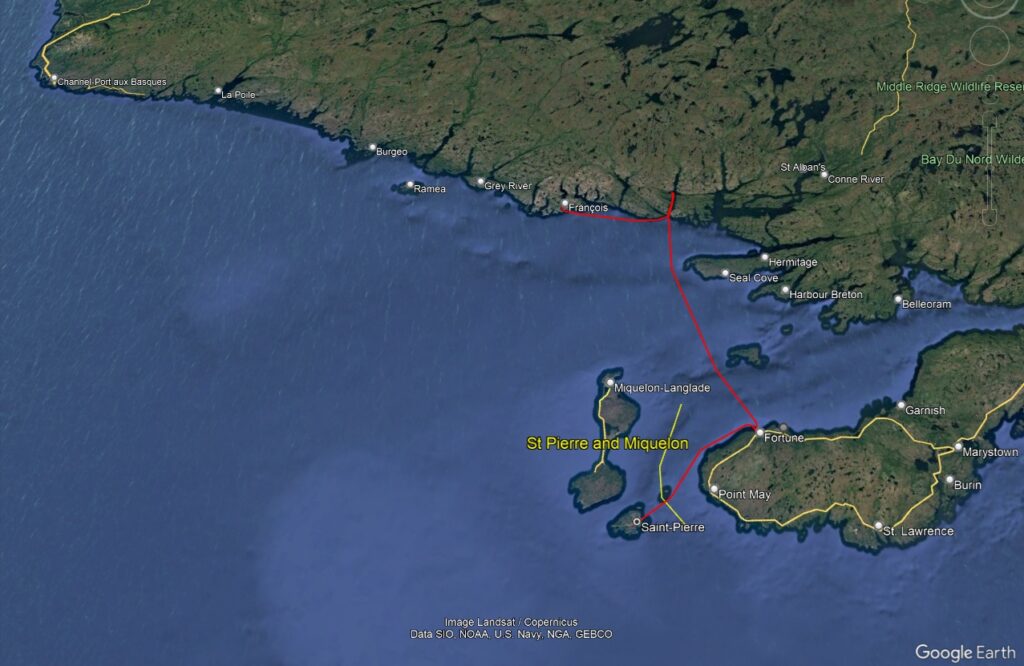
Lillian B path from Facheux to Francois, NL
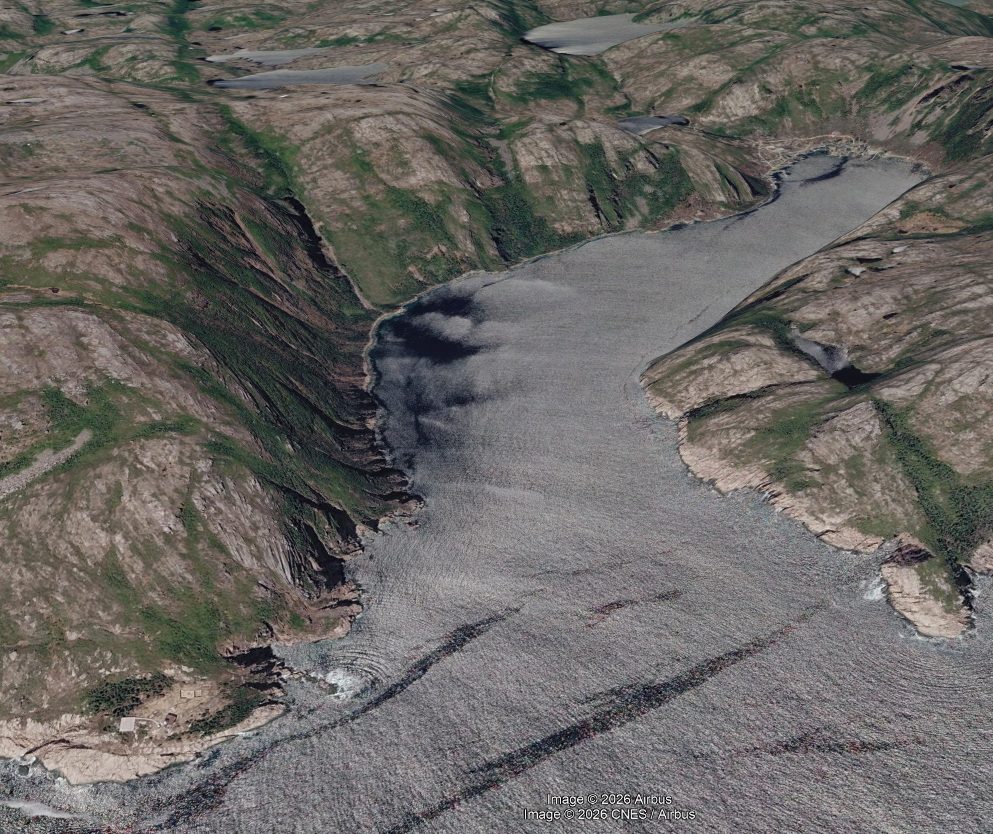
Google Maps image of the Bay of Francois, NL
The motor/sail from Facheux to the fiord of Francois took six hours against moderate wind and waves with a light fog shrouding the water. As we entered the fiord, the waves calmed and the fog lifted to midway up the side of the towering cliffs. The town of Francois had been hidden behind its dogleg entrance. Once inside, the village was clearly visible. Looking forward, the wooden structures at the head of the harbor looked as if they had been built on top of old rockslides that had cascaded from the mountains behind.
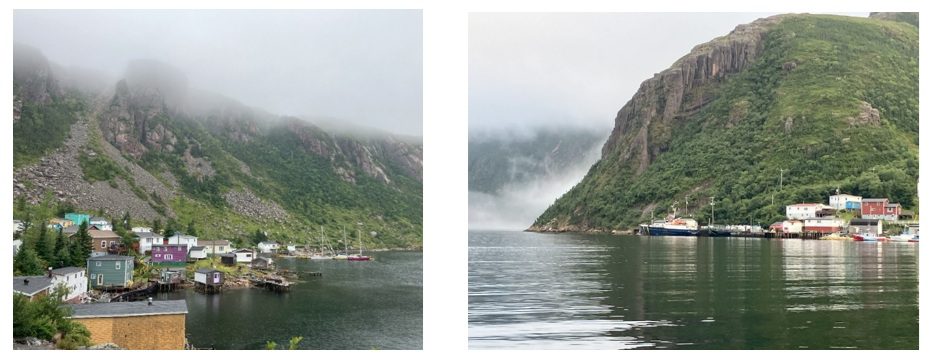
Francois clinging to the hills
Welcoming us to the village was a floating dock. The crew quickly rigged for a port-side tie-up and after a gentle 180 turn we were resting alongside.
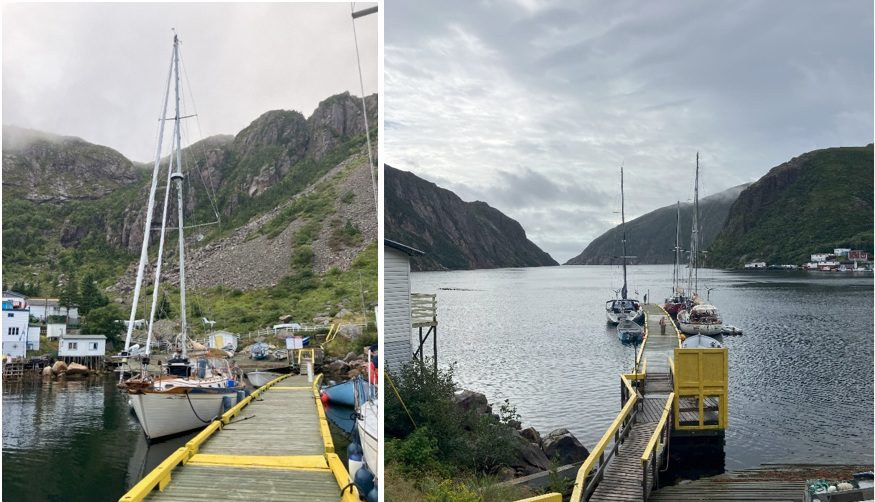
Lillian B secured to the dock at Francois
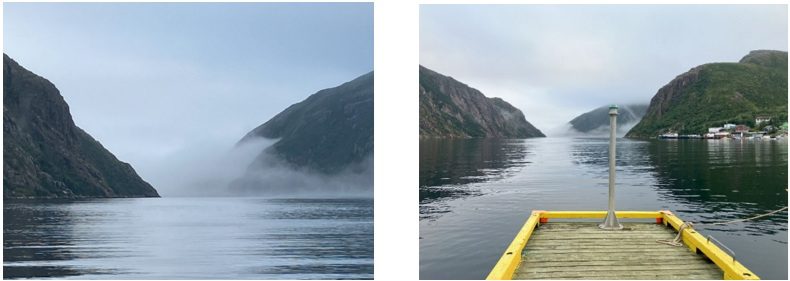
Looking back out through the entrance
Francois is a town courageously struggling to survive. According to the guide book, they considered abandoning the town but voted to stay with a population of only sixty. Curious to see it for ourselves, the crew set out on our customary “walk-about” as soon as we had Lillian secured to the dock.
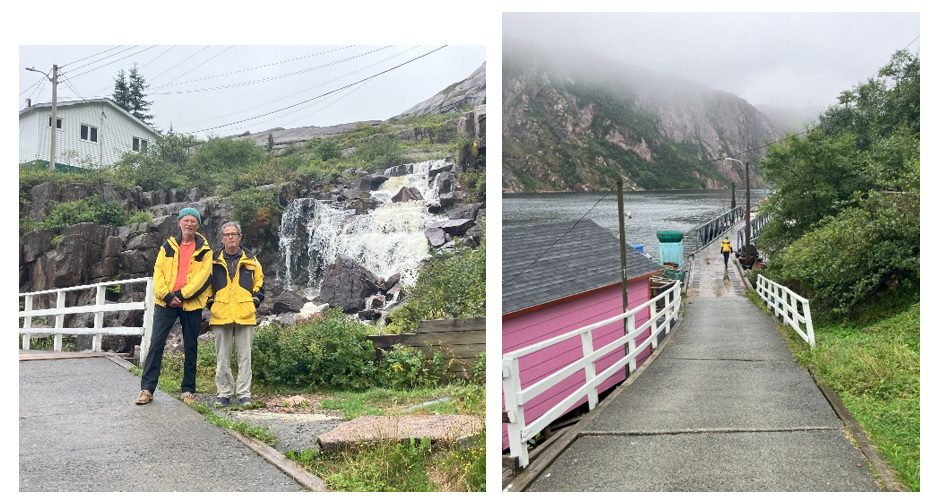
Brimmer Sherman and Burke Munger walking the paths of Francois
The village of Francois is an array of homes and other structures marching their way up the hillside, connected by a series of narrow switch-backs.
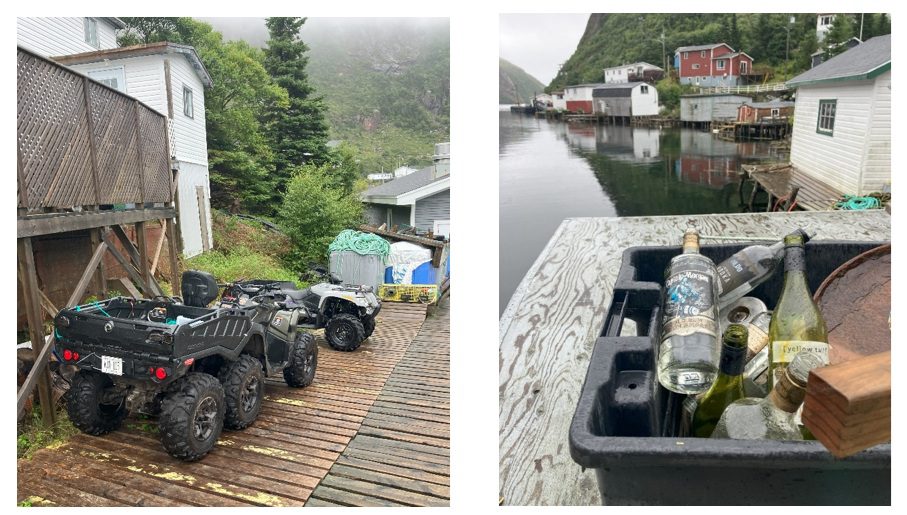
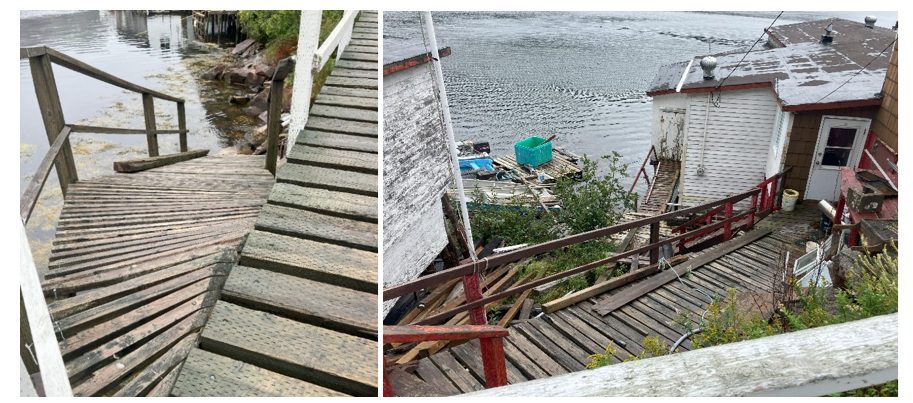
Wooden walkways
The paths are either wooden walkways or pavement, barely wide enough for TRVs. Most are dilapidated, with trash pushed off to the side. But, in contrast, the trash and weathered paths are offset by brightly colored houses, exuberant yard-art, and welcoming signs.
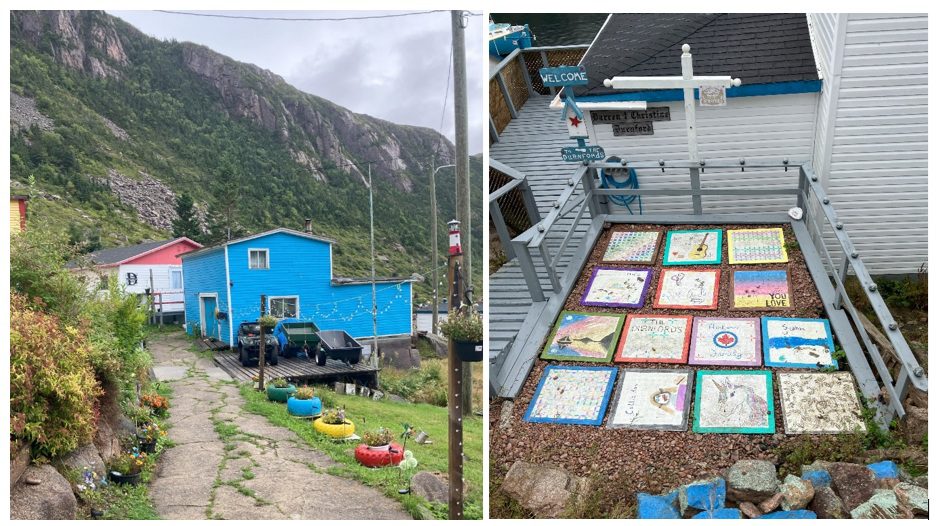
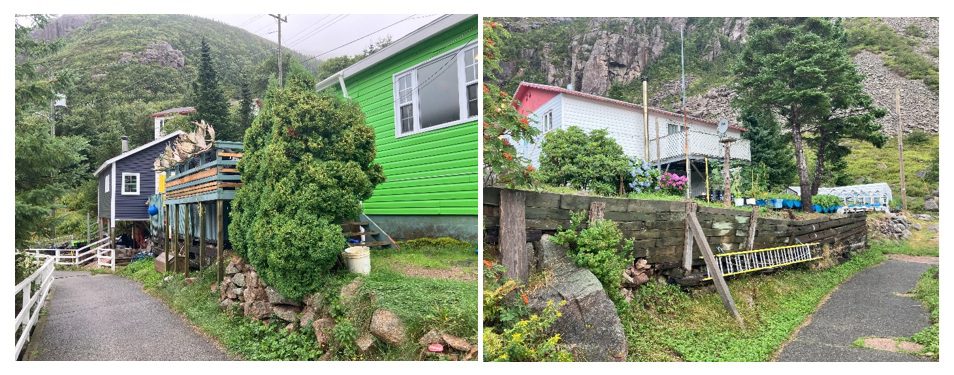
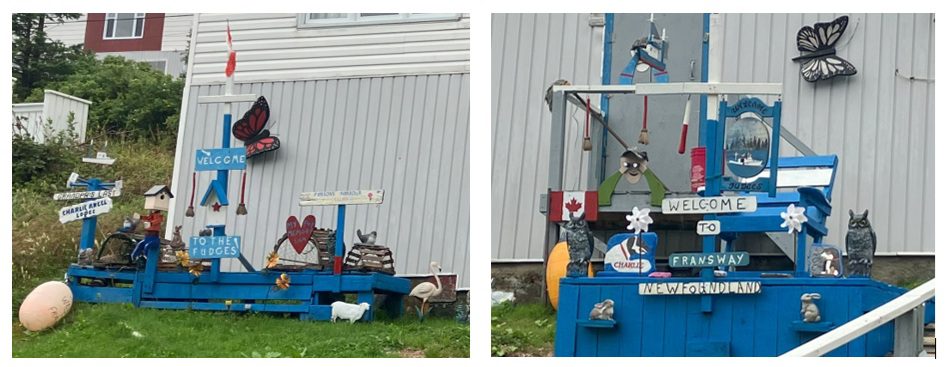
Welcoming signs and yard-art in Francois
In addtion to the cheerful colors and yard decorations, someone had placed dozens of stones throughout the village, decorated with zen-like quotes to inspire those passing by.
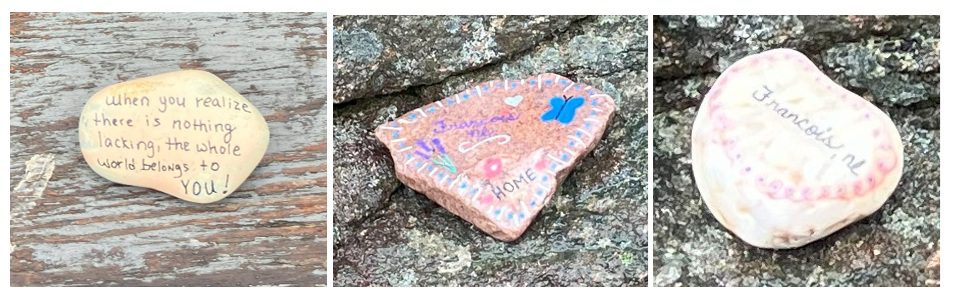
Inspirational stones on ledges and in nooks-and-crannies throughout Francois.
When I ask the store keeper who painted and placed all the stones, she replied curtly that it was her sister, and then added, with what I took to be irony, that that same sister had since left to live in Edmonton. Unlike virtually all the Canadians we met on our trip, the shop keeper did not seem happy to see us. Perhaps the American Flag flying off the stern of the Lillian B. was a factor.
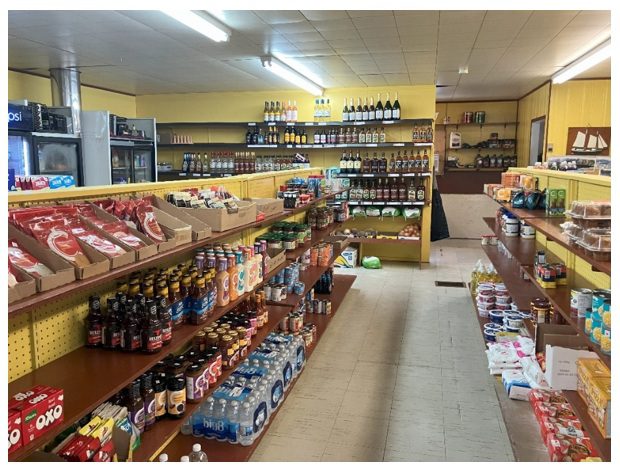
The general store at Francois
Much more friendly was a fisherman down by his boat. His shared that his son still lived in town and they would go out fishing together for either Whelks, sea cucumbers, or scallops. I forget what exactly it was, but whatever it was, it had to be a hard way to make a living.
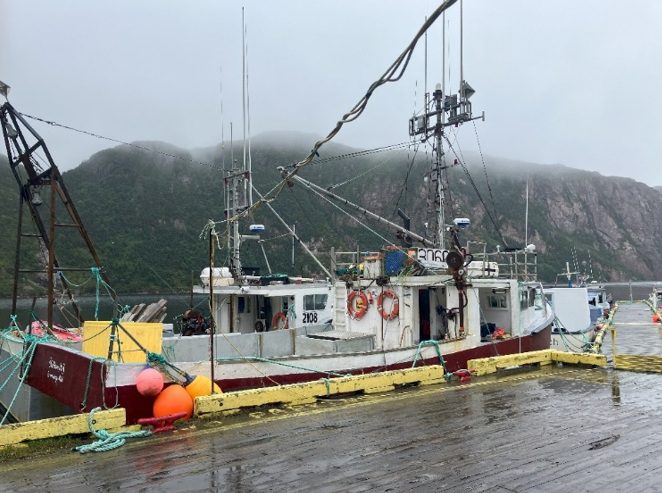
One of the few fishing vessels in Francois
As our final act of exploration, Brimmer and I followed a well-worn path that led out of town and up to the top of the plateau. We were rewarded with the classic photo-op, beautiful flora, a view back down to the town, and the village graveyard. Within that graveyard were family names, including the headstone of James Marsden, who drowned at sea in 1944. More than the brightly painted houses, the yard-art and the small inspirational stones placed throughout the village, that headstone served as a poignant reminder of why it must be hard for his descendent to leave James Marsden and town of Francois behind.
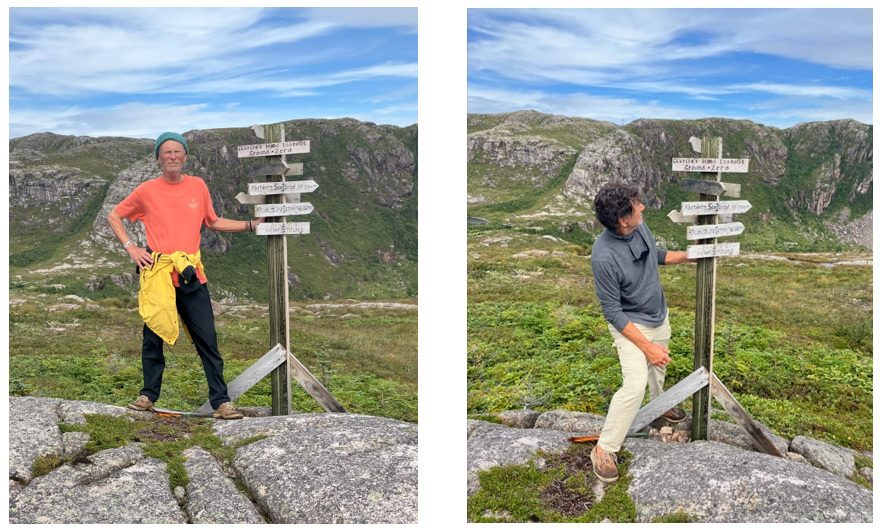
Brimmer Sherman and Sam Lowry at the “top” of Francois.

Picture Plant
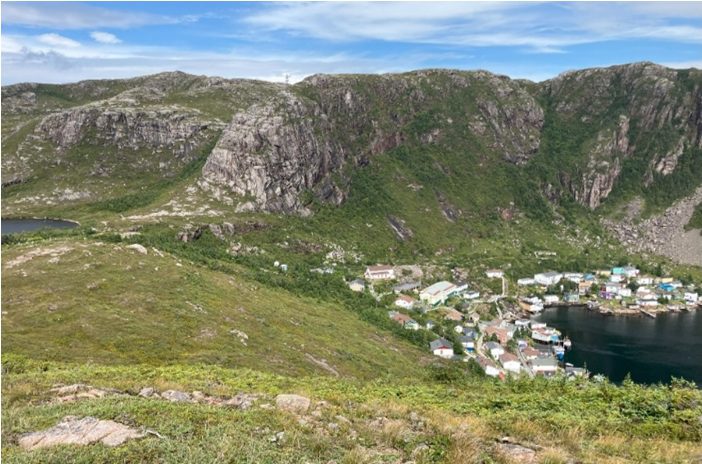
Looking back down on the village of Francois
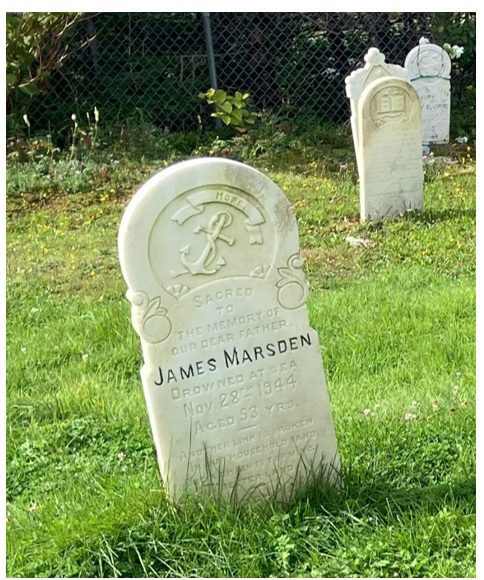
Headstone of James Marsden